Build A High-Performance Goat Farm With Shelters
Design Goat Farming Infrastructure That Combines Operational Workflow And Long-Term Durability

Shelters Engineering provides complete goat shed architectural design services across Pakistan, backed by 24+ years of experience.
Experince
Project Done
Commercial livestock operations in Pakistan now require scientifically planned architecture. Designs that consist of poor ventilation, ammonia buildup and improper feeding circulation can create higher disease transmission, lower milk productivity and feed wastage.
At Shelter Engineering, our 24+ years of design experience and 200+ successful projects ensure integrated farm planning beyond the shed. Our PCATP-certified architects plan feeds, circulation rules, worker movement efficiency and veterinary areas to reduce operational inefficiencies.
We help you save on long-term investments by focusing on animal health, farm productivity, and lower maintenance costs. Let’s build a farm that can face Pakistan’s climate and operational realities.
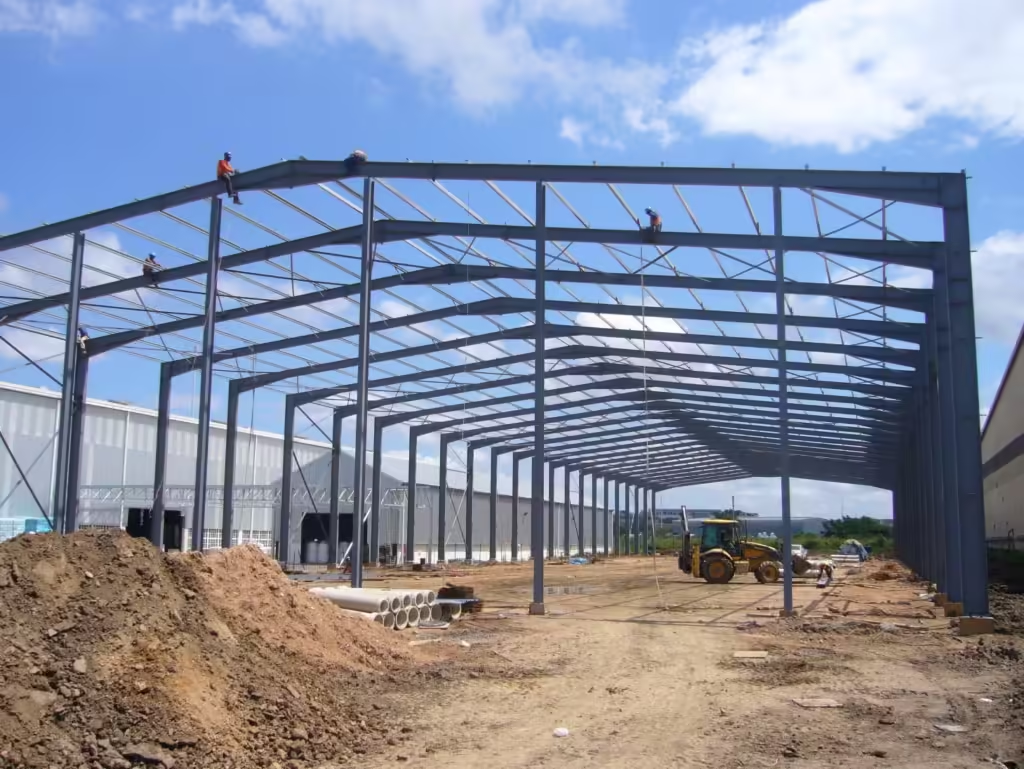
Designed Specifically For Pakistan’s Commercial Farming Challenges
Our planning deliverables include master farm layout plans, goat movement zoning, feed circulation maps and isolation area planning.
We design open-sided goat sheds, semi goat sheds, climate-controlled goat houses, elevated goat shed systems and steel goat barn structures.
Integrate proper ventilation engineering and natural cooling design for animal comfort, thermal reduction, and farm management workflow.
Our structural engineers design steel framing systems, truss structures, column layouts and foundation systems using engineering calculations.
Complete professional documentation, ready drawings with floor plan, elevation sections, roof plans and pen layouts.
Our goat house architectural design architects help you plan farm circulation systems, internal roads, water rebore systems and solar integration.
Our Region-Specific Livestock Design
01
Designed for extreme summer heat, dust exposure and more moisture.
02
Focused on heat reflection, high airflow and corrosion-resistant materials.
03
Designed for snow loads, rain protection, and insulated roofing systems.
04
Focused on wind resistance, dust control, and water-efficient planning.
Modern livestock farming solutions for sustainable growth.
Designed the entire livestock workflow system in Punjab using open-sided ventilation architecture.
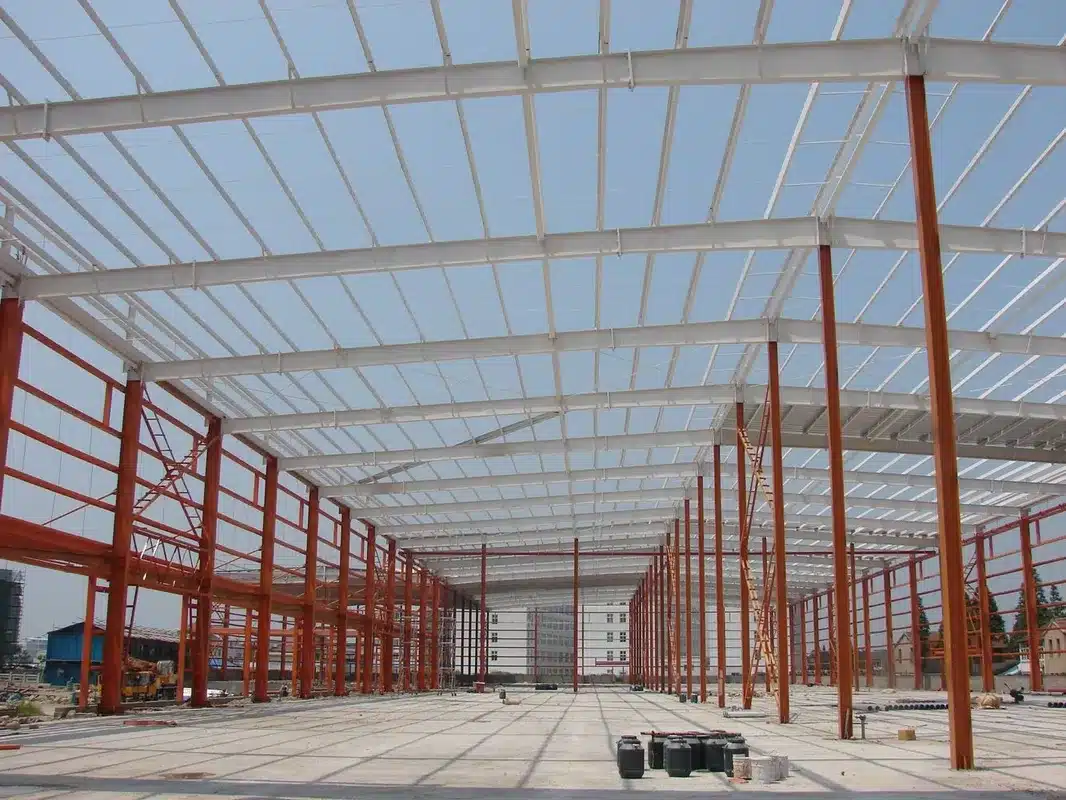
Developed a semi-modern dairy goat farm facility in South Punjab with an extended roof overhang.
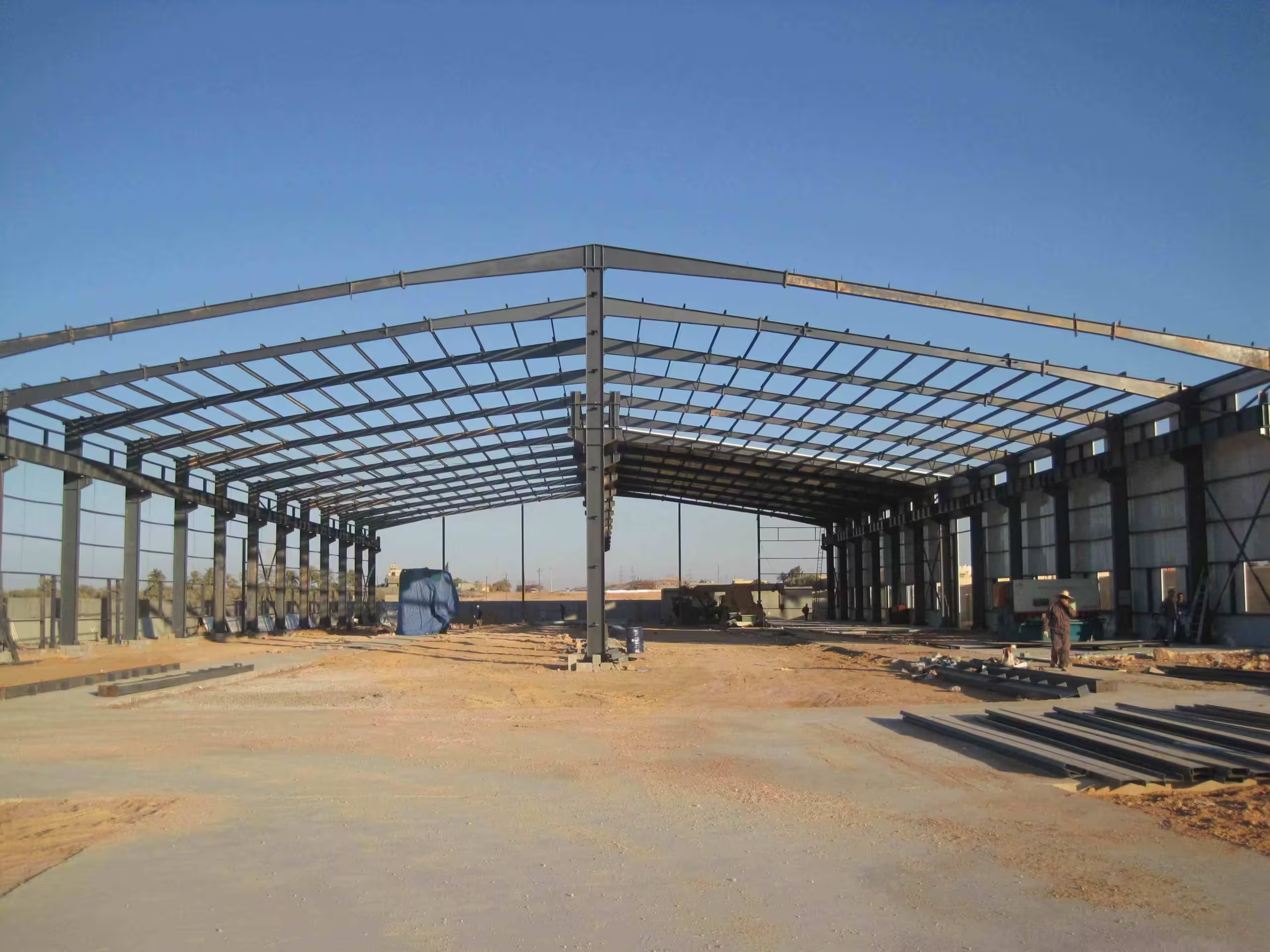
Designed a highly ventilated livestock structure with a heat-resistant roofing system.
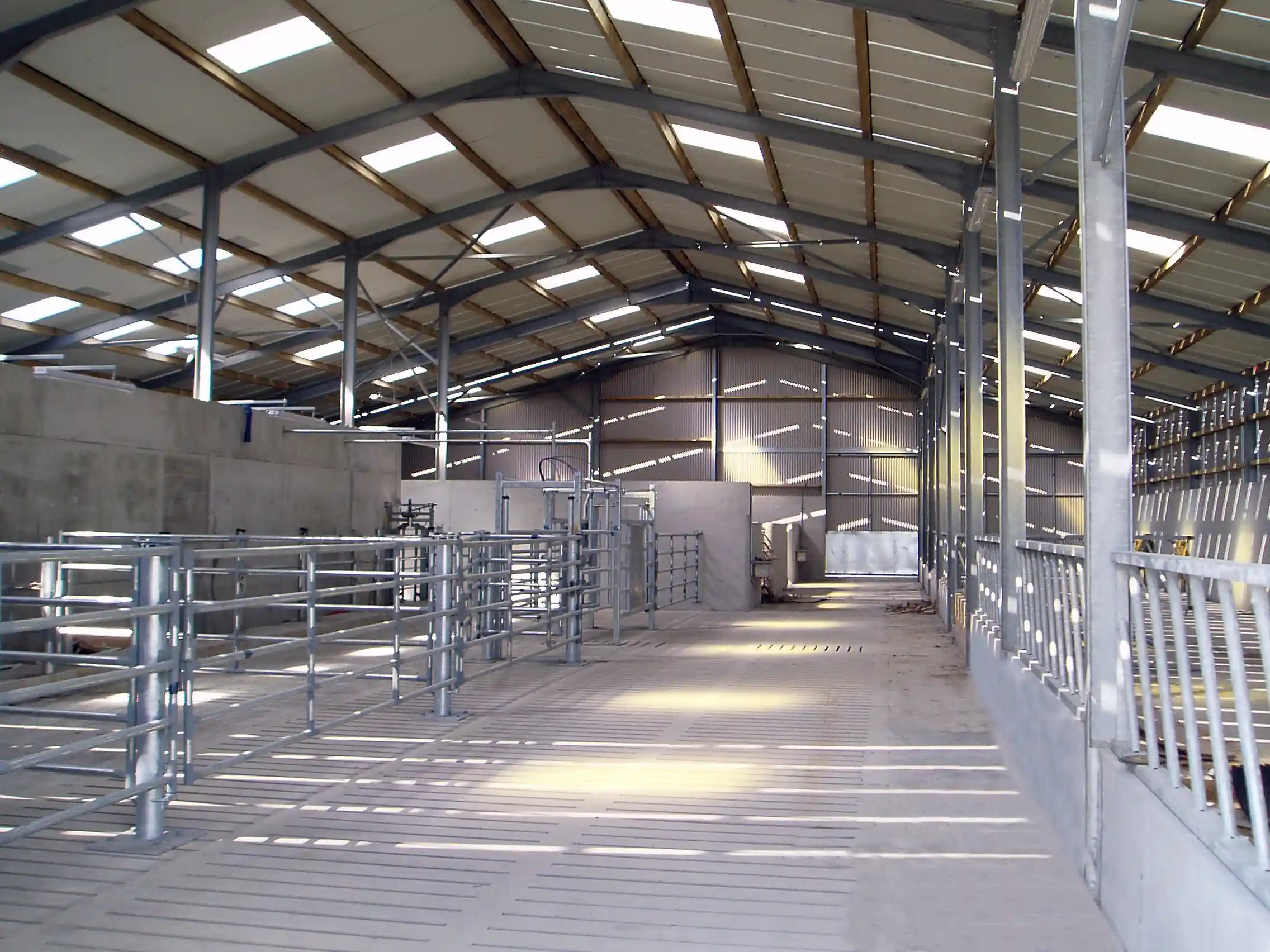
Livestock Facilities Focused On Durability And Productivity
Our team brings 24+ years of interior design, goat shed architecture services, and construction experience across Pakistan.
Integrated architecture, structural engineering, construction execution, and BIM coordination under one coordinated system.
Our team understands the realities of livestock farming across flood agricultural areas and hot and dry climate zones in Pakistan.
Architectural drawings for goat sheds, including BIM modelling, structural analysis software, PEB engineering, and steel detailing workflow.
We design goat farms for future expansion, additional livestock capacity and automation integration without disturbing existing farm activities
Registered with Pakistan in the Engineering Council PEC in the C-2 category, we emphasise transparency and sustainable infrastructure planning.
Maintaining Healthy Livestock Housing With Premium Materials
Performance-Driven Livestock Systems
Meat goat farms are designed using commercial livestock planning standards according to Pakistan's agricultural conditions.
Our dairy livestock architecture integrates climate-responsive dairy shed layouts and a milking parlour planning system.
Pre-engineered buildings, PEB systems, and hot-dip galvanised steel structures for better structural performance.
Automated feeding line provisions, water nipple systems, and smart drainage layouts are designed for operational efficiency.
An export-focused goat farm project plan includes controlled environmental systems and hygienic washdown drainage systems.
Elite nucleus and multiplier breeding farms designed with modern genetic selection for Pakistani climates and market needs.
Structured Around Six Integrated Subsystems
Our design offers comfort during Pakistan’s summer conditions with high ventilation openings for hot escape and cross-ventilation corridors.
We minimise direct heat exposure by installing east-west wall minimisation and north-south shed alignment for balanced airflow.
We incorporate optimised roof height ratios, air exchange calculations, and ventilation-driven heat controls to maintain a stable microclimate.
We eliminate bacteria growth by installing slab flooring for fast water run-off and subsurface drainage channels for moisture removal.
We ensure continuous fresh air circulation by including air exchange rate optimisation and wind direction-based shed positioning.
We use heat-resistant building materials and focus on reduced heat observation structural design for long-term animal comfort and productivity.
The Engineering Lead Design Process Is Made Up Of Technical Stages
Our experts start the process by assessing land topography, soil conditions, assessing rules and utility availability.
In this stage, our architect creates space zoning, structural concept, ventilation concepts and roof geometry systems.
Before construction begins, we use a BIM coordination workflow to closely identify structural clashes, drainage conflicts, and ventilation coordination issues.
After feasibility studies, we map animal movement, feeding parts, cleaning operations and waste disposal for maximum efficiency.
Our engineers calculate wind loads, steel sizing and foundation requirements, so design and structural components must align with each other.
Our architect prepares IFC drawings, shop drawings, construction details and material specifications to get fast approvals.
We don’t leave you with drawings but provide complete supervision for foundation execution, steel erection, roof installation, and ventilation installation.
The ideal goat shed height in Pakistan ranges from 10 to 14 feet at side walls, and the ridge height ranges from 16 to 20 feet for proper ventilation. This measurement is based on thermal behaviour and ammonia dispersion physics. The logic behind the 10 to 14 feet design allows hot air to rise naturally and improve ventilation efficiency, while ridge ventilation allows continuous hot air exhaust.
A lot of roof options are available for goat sheds in Pakistan, and the selection depends on climate intensity and farm scale. Insulated Sandwich Panel Roofing is the best performance option that reduces heat penetration by 60 to 80%. Galvanised Iron GI Sheet Topping System with ventilation gaps is most widely used in Pakistan due to its affordability. The third and most cost-effective approach is a Hybrid Roofing System that combines GI and an insulation layer.
The standard time for designing a small goat shed farm containing 20-100 goats is 1-2 weeks. Medium commercial farms consisting of 100-500 goats can be planned in 2 to 4 weeks. Large industrial farms with BIM coordination and multi-form planning can take 4-8 weeks for the complete design process.
Each shed is designed uniquely for different goat breeds. For instance, the Beetal goat, which is a Punjab breed, requires moderate ventilation and high feeding space per animal. The Kamori goat of the Sindh breed is heat-tolerant but sensitive to humidity, so it requires strong airflow systems. Teddy goats, which are a small breed, can be kept at higher density but require controlled feeding zones. The Boer goat is a meat breed that needs wide movement corridors and high-nutrition feeding layouts.
The space per goat in goat shed designs depends upon the breed type and land area. An adult goat requires 12 to 20 sq ft indoor space, an outdoor paddock requires 25 to 40 sq ft per goat, and a breeding buck needs 20 to 30 sq ft. The space factor is the most essential component while designing, as it directly affects animal health and productivity.
Flooring in the goat shed design directly affects disease control and drainage. Cement flooring is the most commonly used in Pakistan because it works well with the drainage slope system. A hygienic flooring system is commonly recommended as it prevents water stagnation and improves sanitation efficiency. Elevated slatted flooring is the modern system that improves menu separation and reduces hoof diseases.
Yes, the goat shed can easily be expanded in future only if the design includes a modular steel frame system and future expansion connection points. Drainage and ventilation systems should also be designed properly from the beginning for expendable goat sheds. If the design is not planned efficiently, then expansion can lead to demolition of the existing structure and a 2 to 3x increased cost.
Design Goat Farming Infrastructure That Combines Operational Workflow And Long-Term Durability