How to Remove Textured Walls in Pakistan: Skim Coating & Smoothing Guide
Removing textured walls involves removing or covering the raised surface pattern typically found on walls and ceilings and creating a flat surface for painting. The two effective methods are to completely wet-scrape the existing texture with a scraper or to thinly skim over the texture with joint compound until it feels smooth. The selection will be based upon the weight of the texture, whether it is drywall or plastered masonry, and how much time you can invest in drying it in the humid environment of Pakistan.
Whether you’re looking into the options of removing texture from walls before you repaint or before you take them apart to begin a renovation, this guide can help you understand your options, the tools required for each, costs you can expect in Pakistan, and pitfalls you should avoid that could make the job a redo.
What Texture Removal Actually Involves
Wall texture refers to a raised finish used to cover up imperfections in the drywall or plaster or add interest to the wall. When learning how to get rid of textured walls, you have to either physically scrape the whole layer off to a flat surface or cover it with a new compound so that it seems flat when painted. A skim coat is a thin application of joint compound (about 1–3 mm per coat) applied over 2 or 3 coats to mask the sub-surface texture.
Why Homeowners Are Removing Texture Before Repainting
Textured finishes are popular for Pakistani homes constructed until the 1990s and 2000s. They were used to cover irregularities in the plastering. The majority of the design and renovation styles are for flat, matte walls, especially when preparing a house for repainting, selling, or installing lighting fixtures, as texture can scatter light unevenly and make a room look dated. If you are considering renovating an old home in Lahore, Karachi, or Islamabad with a contemporary interior, you will soon face this challenge.
Tools & Materials You Need
| Task | Tools & Materials |
|---|---|
| Wet Scraping | Garden sprayer or spray bottleWide putty knife (10-12 cm)Drop clothsPlastic sheetingPainter’s tape |
| Skim Coating | Joint compoundWide knife (30-45 cm)Mud panMixing paddle and drillSanding pole with 120 to 150 grit mesh |
| Safety | N95 or equivalent dust maskSafety glassesLadder or scaffold plank for ceilings |
| Finishing | Primer sealer RollerBrush for final paint. |
Step-by-Step Guide On How to Remove Texture From Walls
- Clear all furniture and put plastic sheeting over floors and fixtures.
- Test a patch to determine whether it is water-raisable or skimmable.
- Choose the technique, either wet scrape or skim coat.
- Scrape or skim over the surface by filling deep holes prior to smoothing.
- Use the method you have selected (see below for details).
- Lightly sand between coats, wipe down dust, and prime before painting.
How to Scrape Textured Walls (Wet Scraping Method)
Wet scraping is more effective for lighter texture and popcorn-like finishes that have not been covered with a succession of paint layers. Spray a small section with a garden sprayer of water, allow it to soften for 10–15 minutes, and peel sections off using a wide putty knife at a low angle. Scrape within approximately 1 m² areas to stop the water from running out before you can finish.
Painted-over texture will not absorb water and may require a scoring tool to break the paint layer and allow water to penetrate to the compound below. If a patch does not soften after two tries, do not continue scraping the drywall paper; rather, use the skim coat method.
How to Take Off Textured Walls With a Skim Coat (Skim Coating Over Texture)
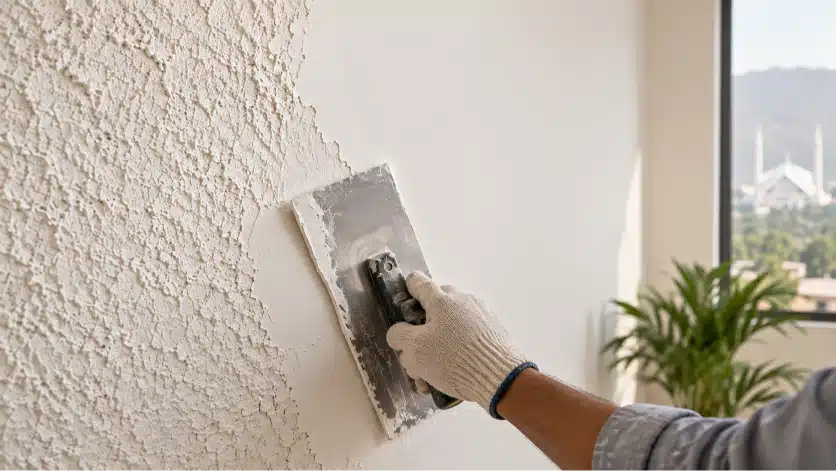
For knockdown, orange peel, or heavily painted texture that will not lift with water, the more reliable method is to skim coat over the existing texture. Use joint compound as thick as pancake batter and apply with a wide knife at a shallow angle, avoiding ridge lines. Dry thoroughly (usually overnight in dry weather, longer in moist weather) and lightly sand, then apply another fine layer of compound to cover any low areas that the texture created during the first application. For moderate knockdown, typically two coats are adequate, but for heavier knockdown, three may be necessary.
How to Remove Heavy Texture From Walls
Removing Knockdown Wall Texture
Knockdown texture has flatter, wider ridges than popcorn, making it more difficult to wet-scrape cleanly. Skim coating is nearly always a better answer than scraping when the wall surface to be stripped has heavy texture with the knockdown pattern, since you are creating a new flat surface instead of working to rip and tear the ridges.
Removing Popcorn Ceiling Texture
The same wet scrape or skim coat methods apply to ceilings, but the work is slower and messier. You’ll need a ladder or scaffold plank to reach comfortably, and more plastic sheeting to protect the room below. When the ceiling was sprayed in the past, before the middle of the 1980s, it should be checked for asbestos as a standard precaution regardless of the country.
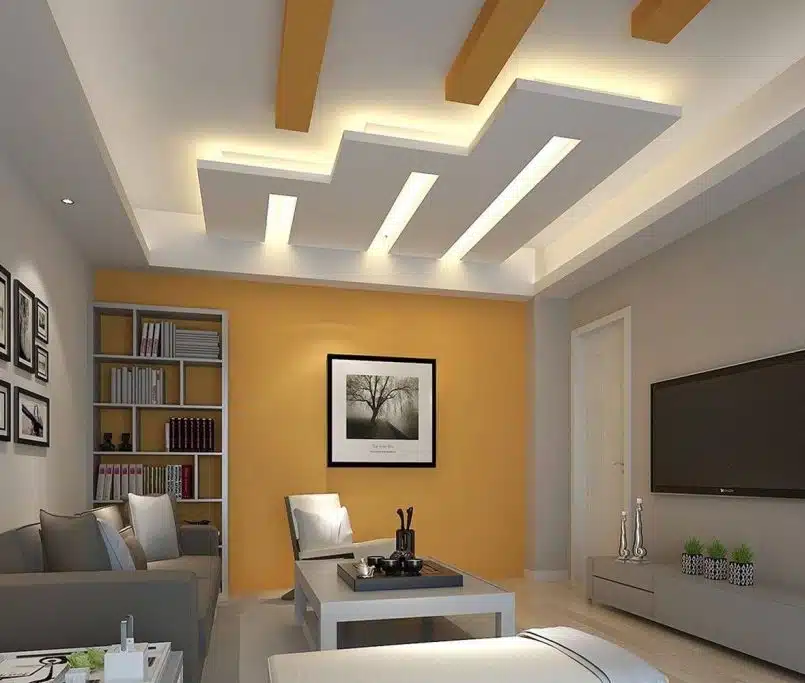
A GUIDE TO CEILING DESIGN TRENDS IN PAKISTAN
Best Way to Remove Textured Walls
The best way to remove textured walls depends on paint and depth.
| Texture Condition | Recommended Approach | Difficulty | Typical Time for One Room |
| Unpainted light or knockdown | Soak and scrape | Moderate | 1 day plus drying |
| Painted or heavy texture | Skim coating | Moderate to high | 2-3 days including coats |
| Very deep ridges | Multiple skim coats | High | 3-4 days |
Climate Considerations for Lahore, Karachi and Islamabad
Skim coating relies on the compound drying completely between coats, and Pakistan’s climate is quite different in various cities, which will require different schedules. Lahore and Islamabad have high humidity in the summer monsoon months (July to September), which can double the normal drying times. Karachi has high humidity for a greater part of the year, making a dehumidifier or a running fan really useful. All three cities have drier winter months and provide the most reliable drying window in the event of a multi-coat skim job.
We have observed that in older houses with plastered brick masonry, moisture is absorbed by the wall surface from a fresh skim coat much faster than in newer construction with blocks. It was noticed that after painting the topcoat, the compound would flash or dry unevenly, whereas in newer construction, with an extra sealed primer coat, the compound would not flash.
Common Mistakes To Avoid
- Not running the test patch and accepting to wet-scrape the texture that will not soften.
- Using a thick single skim coat instead of two or three thin coats that may crack when drying.
- Roughening up the surface prior to sanding after the compound has dried, thereby not allowing for proper drying.
- Failing to prepare and prime before painting over new compound, which results in sheen variations and flashing.
- Failing to observe the safety precautions in older homes.
What It Typically Costs in Pakistan
Wage rates may differ depending on the city, condition of the wall, and the need for outside labor. Professional skim coating in Pakistan costs between PKR 60 and 150 per square foot, with knockdown texture and ceiling work falling at the higher end of that range. That’s a lot of material cost versus a DIY skim coat, and you should include your time for all of the drying cycles.
When to Hire a Professional vs DIY
If you’re comfortable working with a trowel, you can do a nice light texture in one little room in your own home on a weekend. When the work is to be done in the whole house, on the ceiling, or on a knockdown texture that has been painted over multiple times and needs texture removal, hiring a professional crew costs more upfront than DIY materials alone, but it saves you the time lost to multiple drying cycles between coats.
Why Homeowners Work With Shelters Engineering
Shelters Engineering has been active in residential and commercial construction works for 15 years in Lahore and Islamabad. Our PEC-registered engineers provide finishing work along with structural work. Our teams not only finish the walls but also know what’s beneath them, such as masonry and plaster.
Frequently Asked Questions
How long does it take to get rid of textured walls in one room?
A typical bedroom will take about 1 day to be scraped and 2-3 days to be skim-coated (between coats).
Can I paint over textured walls without removing the texture?
Light will still penetrate to reveal all the peaks and valleys, and the texture will never be obscured by the paint. The surface needs to be skim-coated or scraped for an absolutely smooth surface.
Will skim coating last a lifetime?
Yes. When properly applied and primed, skim coats will provide a new surface for painting and stay flat for normal use.
What is the easiest method for beginners?
If you’re a first-time DIYer, the soak and scrape method on unpainted light texture is the easiest to follow. Professional skim coating is recommended for surfaces that are hard or painted.
Does humidity in Pakistan affect the process?
Yes. The humid weather results in a longer drying time between coats. Work during less humid times or manage ventilation to maintain work.
Ready to Get Started?
Shelters Engineering’s finishing crews can evaluate the wall texture, advise on the proper finishing technique, and do the entire skim coat job to paint-ready for walls that are in need of more than a weekend job. Get in touch for a site visit and quote.